

Nonprofit organizations face a unique balancing act. They must fulfill their missions while often doing so with limited resources. As a result, every decision that impacts the organization’s profitability can also directly impact its ability to deliver vital services and maintain the trust of donors, grantmakers, and the communities they serve. Among the most important of these decisions relates to cash management, not only for the additional income cash can generate but also to ensure cash is liquid and available to meet its liabilities. As a result, effective cash management for nonprofits is more than just an operational requirement, it is a necessity.
Banks and other depository institutions can be powerful allies to nonprofits in achieving these goals. By offering specialized services such as nonprofit-specific accounts or business-focused accounts with access to expanded FDIC insurance coverage and compliance support, financial institutions help nonprofits manage the complexities of cash management. In partnership with specialized providers like R&T Deposit Solutions, banks can deliver tailored solutions prioritizing liquidity and safety while optimizing their balance sheets.
This article explores essential components and everyday cash flow management challenges within nonprofit organizations. It also illustrates how banks and trust companies can adopt streamlined balance sheet management solutions that enable nonprofits to access expanded FDIC insurance coverage on their cash funds.

What is Cash Management for Nonprofits?
Cash management for nonprofits involves the strategies and processes nonprofits use to handle incoming funds, such as donations, grants, and membership dues. It also includes managing outgoing payments tied to their mission. The primary goal is to maintain enough liquidity to cover operational costs while adhering to any donor, grant, or regulatory requirements regarding the proper use of funds.
Defining cash for a nonprofit extends beyond physical currency or checking account balances. Cash includes recurring and one-time donations, grants, funds set aside for specific programs, and investment vehicles such as certificates of deposit.
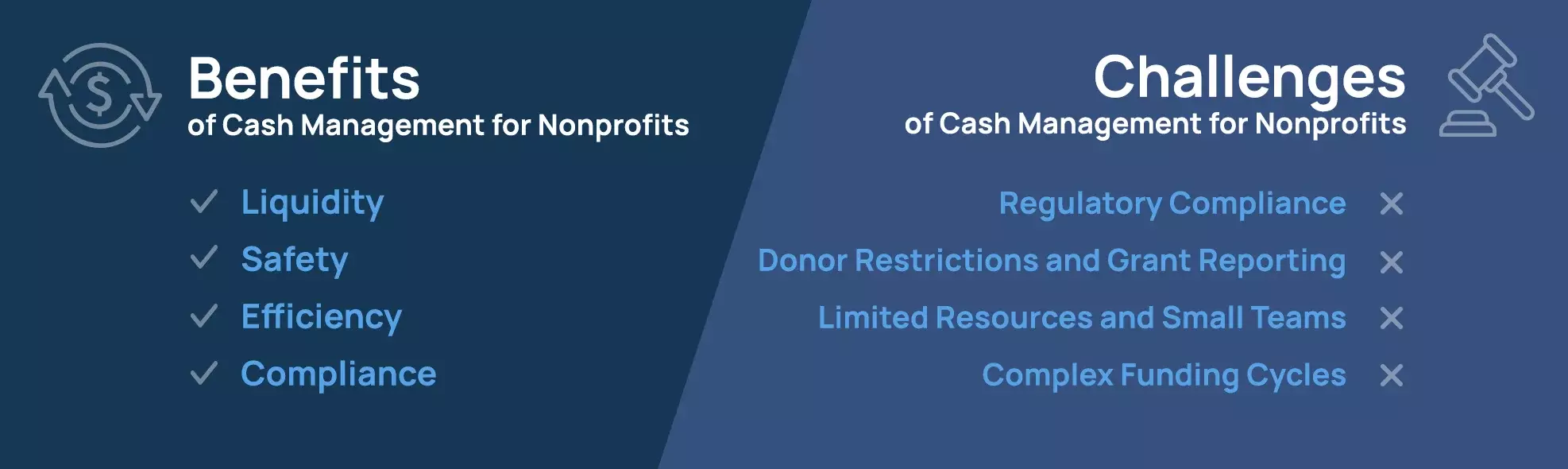
Benefits of Cash Management Solutions
- Liquidity: Helps nonprofit organizations meet day-to-day expenses and be prepared for emergencies.
- Safety: Leverages cash management solutions with access to expanded FDIC insurance so funds remain protected, regardless of balance size.
- Efficiency: Minimizes administrative overhead to free up staff for mission-focused work.
- Compliance: Helps nonprofit organizations adhere to donor and investment policy requirements and regulatory requirements.
Challenges in Cash Management
Nonprofits face several financial challenges, including:
- Regulatory Compliance: Federal and state requirements, including IRS regulations and donor-imposed restrictions, can be complex. Noncompliance may result in penalties or reputational damage.
- Donor Restrictions and Grant Reporting: Many funding sources have specific instructions and restrictions on using their funds. Accounting for these restrictions requires careful tracking and transparent reporting.
- Limited Resources and Small Teams: Many nonprofits operate with lean staffing, making financial management more difficult.
- Complex Funding Cycles: Irregular donation and grant schedules require planning to maintain liquidity throughout the year.
How Banks and Trust Organizations Can Support Nonprofits
Banks and financial depository institutions support nonprofits by providing access to a range of deposit and investment options, including deposit accounts with daily or term maturities and access to expanded FDIC insurance. These firms often offer additional services to help them satisfy their numerous compliance and regulatory obligations. By partnering with R&T, banks and financial institutions can more effectively serve nonprofit clients, while optimizing their own deposit funding strategies.
How Banks Optimize Nonprofit Deposits
Banks that work with nonprofit organizations must ensure that nonprofit deposits remain insured and accessible while optimizing their balance sheets. Solutions like the Demand Deposit Marketplace® (DDM®) program and the Certificate of Deposit Marketplace Exchange℠ (CDMX® ) program provide access to expanded FDIC coverage and liquidity while efficiently managing deposit flows. By leveraging these strategies, banks enable nonprofits to meet their cash flow needs while optimizing deposit usage on their balance sheets.
Cash Sweep Programs
Cash sweep solutions automatically move excess funds into interest-bearing deposit accounts at FDIC-insured banks, ensuring nonprofits earn returns on idle cash while maintaining liquidity. This approach can reduce or offset administrative fees and safeguard assets without sacrificing access to funds when needed.
Reciprocal Deposits
Nonprofits often hold substantial cash balances, especially if they manage multiple grants or large donations at once. Reciprocal deposit programs allow banks to distribute their non-profit customers’ funds across a network of participating FDIC-insured receiving banks, providing their customers with access to expanded FDIC insurance while receiving an equal amount of insured deposits back from the network. This ensures customer funds are insured up to the program limit, as may be required by their investment policy, with the operational convenience of maintaining a single account at their primary banking institution. The result is a single point of contact, broad deposit insurance coverage, and consolidated statements, keeping administration simple.
Certificates of Deposit (CDs)
Certificates of Deposit give nonprofits a secure and predictable way to invest funds they do not need for immediate expenses. Banks issue FDIC-insured CDs that protect those deposits, while helping nonprofits earn competitive returns.
When nonprofits receive large donations or grants that do not have immediate allocations, they can maximize returns by moving those funds into CDs instead of keeping them in low-yield checking accounts. Banks offer short-term and long-term CDs tailored to a nonprofit’s liquidity needs. By structuring CD maturities in a laddered approach, banks ensure nonprofits can earn interest while keeping funds accessible when needed.
Access to Alternative Funding and Community Networks
By assisting nonprofits with cash management, banks build goodwill within the community and develop deeper relationships with nonprofit leadership, board members, and donors. These relationships can create additional opportunities for financial services and reinforce the bank’s role as a trusted community partner.
Banks that partner with specialized providers like R&T gain access to a broader array of services, allowing them to serve nonprofit clients better and manage their funding strategies effectively.
The Payoff of Streamlined Cash Management
A well-structured cash management strategy benefits nonprofits and the banks serving them.
For Nonprofit Organizations:
- Reduced Risk: Access to expanded FDIC coverage on large deposits ensures peace of mind and financial security.
- Greater Visibility and Transparency: Enhanced reporting tools improve donor-restricted fund tracking and grant management.
- Time Savings: Automated solutions minimize manual processes and allow staff to focus on mission-driven initiatives.
- Improved Financial Stability: Proactive planning and optimized cash flow help nonprofits maintain adequate liquidity and withstand funding gaps.
For Banks and Financial Institutions:

- Deeper Community Ties: Supporting nonprofit financial health strengthens the bank’s role in the community.
- Expanded Client Base: Relationships with nonprofits often lead to engagement with donors, board members, and affiliated organizations.
- Competitive Differentiation: Offering tailored solutions, such as reciprocal deposits and cash sweep accounts, sets banks apart.
- Long-Term Partnerships: When nonprofits see tangible benefits, they remain loyal and develop sustained banking relationships.
Strong cash management practices are essential to a nonprofit organization’s financial health. Nonprofits can focus on fulfilling their mission by ensuring liquidity, safeguarding assets, and maintaining compliance. Banks play a pivotal role in this process by offering deposit solutions such as the DDM® and CDMX℠ programs. These solutions provide nonprofits with access to expanded FDIC insurance, liquidity, and financial tools, enabling banks to optimize their balance sheets.
Learn More About R&T Deposit Solutions
R&T Deposit Solutions provides banks, broker-dealers, trust companies, and other financial institutions with flexible cash sweep and deposit funding solutions designed to protect their customers’ funds.
Contact R&T to learn how our solutions can help your bank or financial institution better serve nonprofits while retaining and growing your deposit base.