



BaaS / Sponsor Banks
Scale Fast. Stay Disciplined.
Support FinTech growth and meet balance sheet requirements.
R&T gives Banking-as-a-Service (BaaS) and sponsor banks the tools to gain total command of their balance sheets and manage partner-driven deposit growth. Using configurable deposit programs, BaaS / sponsor banks can respond to changing deposit flows, operate efficiently, and continue to meet regulatory expectations as programs scale.

How R&T Creates Value for BaaS Banks

Manage Growth Without Limits
Support rapid deposit growth from FinTech programs without exceeding balance sheet capacity, using R&T’s extensive network as an “escape valve” to manage excess deposits.

Define Your Deposit Strategy
Configure deposit allocation and pricing, and make adjustments in real time as programs grow and conditions change.

Reduce Concentration and Volatility
Distribute deposits across a broad network to stabilize flows, reduce reliance on individual FinTech programs, and improve funding predictability.

Strengthen Funding Flexibility and Liquidity
Align deposit flows with liquidity strategies and access contingent funding through our reciprocal feature.
DDM® Program Advantages
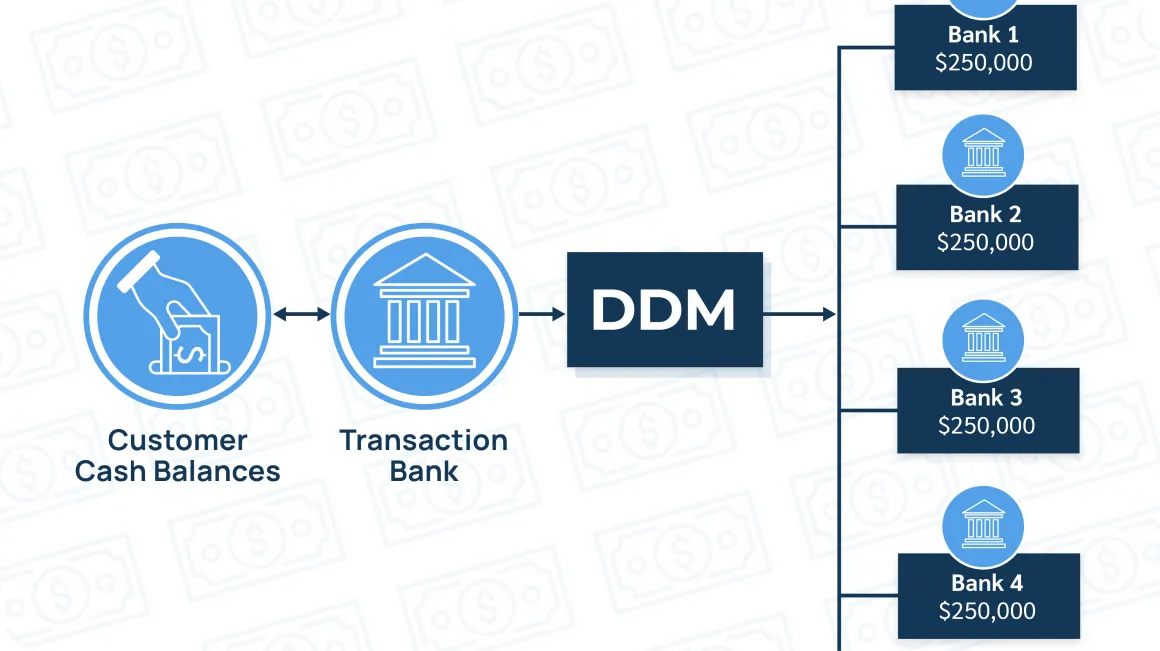
The Demand Deposit Marketplace® (DDM®) program is a cash sweep solution that enables BaaS / sponsor banks to manage rapid deposit flows with greater efficiency and balance sheet discipline.


Control Your Balance Sheet
Retain core deposits, place excess balances, or use the reciprocal feature to manage liquidity and funding more effectively.
Simplify Operational Structure
Streamline customer onboarding and program management with a dual-party model that reduces complexity compared to traditional multi-party arrangements.
Manage at the Program Level
Configure how deposits are sent, received, or reciprocated at the program level to enable centralized and predictable deposit management.
Integrate with Existing Systems
Integrate with core systems and ledger platforms through a flexible architecture that works with existing infrastructure, without reconfiguration.
Get Expert Guidance
Count on hands-on R&T experts to work alongside your team and support program design, strategy, and pricing.
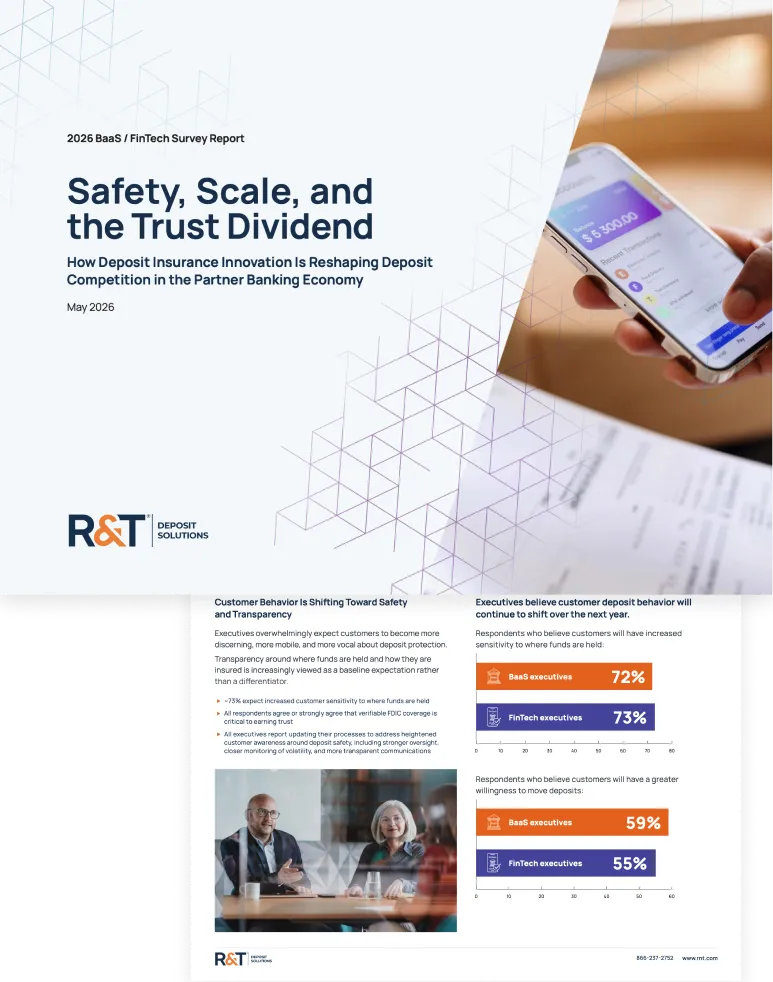
2026 BaaS / FinTech Survey Report
Safety, Scale, and the Trust Dividend
R&T Deposit Solutions’ survey of 200 U.S. BaaS and FinTech executives reveals a clear shift in how institutions compete for deposits. Deposit safety, transparency, and trust are no longer supporting elements – they have become central to customer acquisition and retention.
Read this report to learn:
-
How customer expectations are changing
-
Why regulatory pressure is forcing institutions to rethink operating models
-
Which strategic priorities are emerging as institutions compete for deposit share
BaaS Banks Use R&T to Solve Operational Challenges
BaaS / sponsor banks operate in high-growth environments where deposit flows and balance sheet constraints shift quickly. R&T helps BaaS / sponsor banks manage these dynamics with configurable deposit solutions.
Growth Outpacing Balance Sheet Capacity
Rapid FinTech-driven deposit growth can exceed balance sheet capacity, forcing banks to manage concentration risk and regulatory expectations simultaneously.
Volatile and Concentrated Deposit Flows
BaaS deposits often move quickly and concentrate within a small number of FinTech programs, increasing exposure to sudden changes in customer behavior.
Owning Oversight in FinTech Partnerships
While FinTech partners drive deposit growth and the customer experience, banks bear responsibility for risk and compliance across rapidly scaling programs.
Scaling Safely Under Regulatory Pressure
BaaS programs must support rapid growth while meeting evolving regulatory expectations, requiring partner banks to balance expansion with long-term operational resilience.
Limited Flexibility in Managing Deposits
Rigid deposit programs often involve fixed bank lists, complex onboarding structures, or limited allocation flexibility, making it difficult to respond to FinTech-driven inflows and shifting market conditions.
Liquidity and Contingency Funding Pressure
Rapid deposit inflows and outflows can strain liquidity planning, requiring banks to rely on flexible funding strategies and access to contingent liquidity.