

In a market environment where deposit flows can swing by billions overnight and regulatory expectations tighten with each cycle, relying on a single sweep or deposit network provider is a concentration risk few banks can afford. A dual-provider strategy, in which a bank’s deposit sweep infrastructure is spread across two complementary providers, has become a core element of balanced liquidity management, resilience, and growth.
The current regulatory landscape makes this strategy even more timely. H.R. 6644, enacted as part of the 21st Century ROAD to Housing Act on July 11, 2026, creates new opportunities for banks by expanding their ability to leverage or further leverage reciprocal deposits. The Act replaces the previous flat reciprocal deposit cap with a progressive, liabilities-based framework that can reach up to $30B once implemented through FDIC rulemaking.
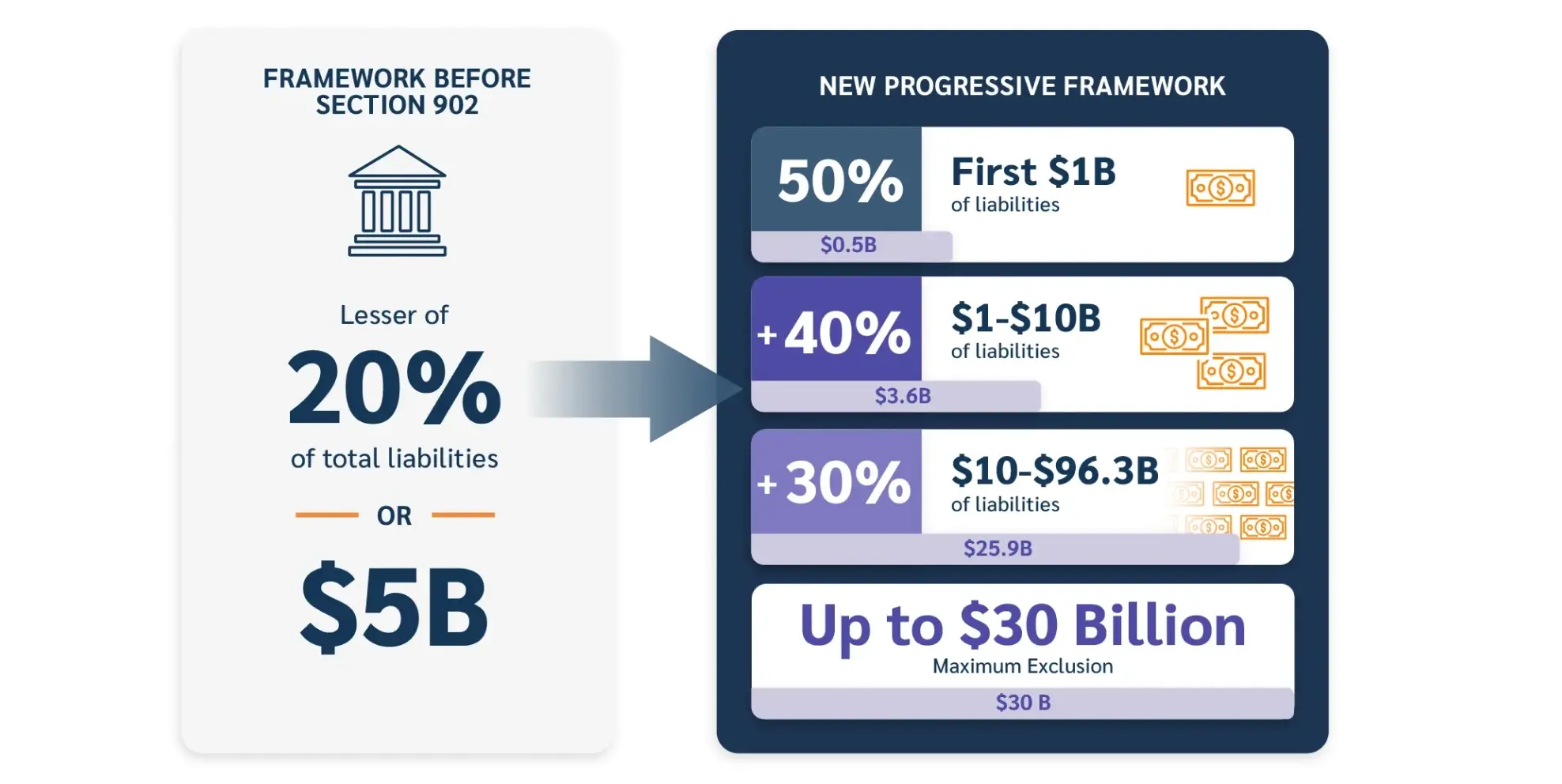
Subject to FDIC implementation. Each tier is calculated separately and added cumulatively.
As banks look to capitalize on this increased capacity, a dual-provider strategy offers greater choice while reducing dependence on any single network. H.R. 6644 not only expands what banks can do with reciprocal deposits, but it creates an opportunity to rethink how they access them.
The Concentration Problem (and why it’s growing)
Consolidating with one provider can promise some level of simplicity: fewer interfaces, fewer contracts, and a single operating playbook. But consolidation often masks three critical tradeoffs:
A dual-provider model addresses these gaps directly, giving treasury and product leaders a redundant path for placement, more negotiating leverage, and a wider canvas for product design.
Two Practical Dual-Provider Patterns that Work
Based on what we see across banks of all sizes, two operating patterns consistently balance flexibility and complexity:
-
1
Line-of-Business Solution
Route entire segments (e.g., consumer, private bank, commercial or specialized verticals) to distinct providers. Operationally, this is the cleanest approach; each customer receives one set of terms, disclosures, and statements tied to a single program. Compliance, reporting, and provider management are simpler because flows align with clear business boundaries. It’s also easier for capacity planning: your commercial segment growth, for instance, can scale within Provider B’s bank network without disrupting your retail book.
-
2
Customer Account Splitting
Place customers initially in a primary network up to a defined insurance threshold and sweep balances above that threshold to a secondary provider. This pattern can optimize economics (maximizing lower cost capacity first) and reserve expanded coverage for high-balance customers. The trade-off is added servicing complexity for customers who span two programs. Terms and communications must be crystal clear, and opt-outs require tight controls.
A Concrete Example: Reducing Risk While Unlocking Growth
Consider a regional bank with strong private banking and a fast-growing commercial treasury franchise. Historically, it used a single sweep provider across all segments. After several quarters of double-digit growth in treasury balances, the bank faced two issues: (1) creeping concentration with one operational counterparty and (2) capacity strains for certain industry verticals with episodic inflows.
Through Line-of-Business (“LOB”) solutions, the bank retained commercial banking with its incumbent sweep provider and transitioned private banking customers to R&T Deposit Solutions, strengthening capacity and resilience without repapering their commercial customers.
The result:
Where R&T Fits in and Why Banks Choose Us
R&T Deposit Solutions has built a suite of programs designed to support dual-provider strategies without forcing wholesale systems changes:
Demand Deposit Marketplace® (DDM®) Program:
Daily sweep administration giving customers access to pass-through FDIC deposit insurance on their funds (subject to applicable requirements), built to scale across commercial, consumer, and specialty segments.
Certificate of Deposit Marketplace ExchangeSM (CDMX®) Program:
Streamlined access to timed deposit capacity for duration needs.
Against the backdrop of H.R. 6644, these capabilities take on even greater strategic importance. As banks gain expanded opportunities to incorporate reciprocal deposits into their broader deposit strategies, having the right provider relationships in place can support more ambitious program goals while enhancing resilience. R&T provides an additional avenue for reciprocal deposit capacity, giving banks greater choice and flexibility as their programs evolve and grow.
A line-of-business approach allows banks to adopt a dual-provider strategy without introducing customer-facing complexity. By keeping each segment aligned to a single solution, institutions preserve clarity and continuity while gaining strategic flexibility behind the scenes. This structure enables leaders to diversify risk, scale capacity, and adapt placement strategies over time—without forcing broad operational change or disrupting established relationships.
Illustrative Case Study: Mid-sized Bank (mid-cap, anonymized)

Context:
~$25B assets; legacy single-provider model; strategic push into entertainment banking and commercial real estate (CRE).
Challenge:
Surging deposit inflows from new verticals exceeded the incumbent provider’s preferred placement mix; bank’s risk committee flagged counterparty concentration.
Approach:
-
Consumer and private bank:
Migrated to R&T Deposit Solutions (DDM & CDMX programs). -
LOB Solution:
Commercial and Specialty (Entertainment, CRE) remained with the incumbent sweep provider. -
Routing and Operations:
Core-level customer flags determined program assignment; customer statements and program T&Cs remained single-program per customer; opt-out logic simplified by segment.
Outcomes (first 180 days):
-
Resilience:
Two fully operational sweep avenues with independent capacity and change windows. -
Capacity and Coverage:
Expanded receiving bank access to absorb episodic inflows from entertainment clients without throttling CRE placements. -
Cost Discipline:
Ability to prioritize lower-cost capacity per segment and negotiate economics independently with each provider. -
Customer Experience:
No dual statements; fewer service tickets related to opt-outs and statement clarity.
Designing Your Dual-Provider Roadmap

- Define clean segment boundaries. Start with customer tax ID overlap analysis and assign each LOB to a single program wherever possible.
- Codify routing rules upstream. Implement routing on the core or account origination layer so sweep instructions are program-aware before they’re generated.
- Map customer disclosures and statements. Keep each customer to one set of documents tied to one program; only use account-splitting for targeted, high-balance cohorts.
- Harden contingency playbooks. With two providers, run semi-annual capacity and outage drills; verify bank list alternates and opt-out handling.
- Measure economics by segment. Track marginal cost of capacity, revenue credit, and utilization per provider and LOB; adjust allocations quarterly.
Why Now?
Deposit markets have become structurally more dynamic: FinTech partnerships, non-operational corporate balances, and seasonal commercial verticals can add variability to both volumes and insurance needs. A dual-provider strategy future-proofs your franchise, giving you choice when markets tighten and speed when growth arrives.
As reciprocal deposits take on a larger role in how banks manage liquidity, protect deposits, and support growth in light of HR 6644, banks have an opportunity to think more strategically about the infrastructure behind them.
R&T is ready to help you implement this with minimal disruption:
If you’re considering a dual-provider strategy or want a fast, practical readiness assessment, R&T Deposit Solutions can help develop a structured proposal that aligns customer segments to the right program design, defines clear core-integration steps, and quantifies capacity, resilience, and cost impacts – all while delivering the best possible customer experience.