



Once implemented through FDIC rulemaking, the 21st Century ROAD to Housing Act will replace the previous flat reciprocal deposit cap with a progressive, liabilities-based framework that can reach up to $30 billion.

A New Framework for Reciprocal Deposits is Here.
H.R. 6644 significantly expands the capacity for reciprocal deposits eligible for non-brokered treatment, creating new opportunities to strengthen funding strategies, retain valuable deposit relationships, and optimize balance sheet management.
H.R. 6644 Expands What’s Possible
The new framework calculates non-brokered reciprocal deposit capacity using three liability tiers:
- 50% of the first $1B of total liabilities
- 40% of the next $9B
- 30% of the remaining liability bands (up to the statutory maximum)
The law calculates each liability tier separately, then combines the results to determine the total reciprocal deposits excluded from brokered treatment.
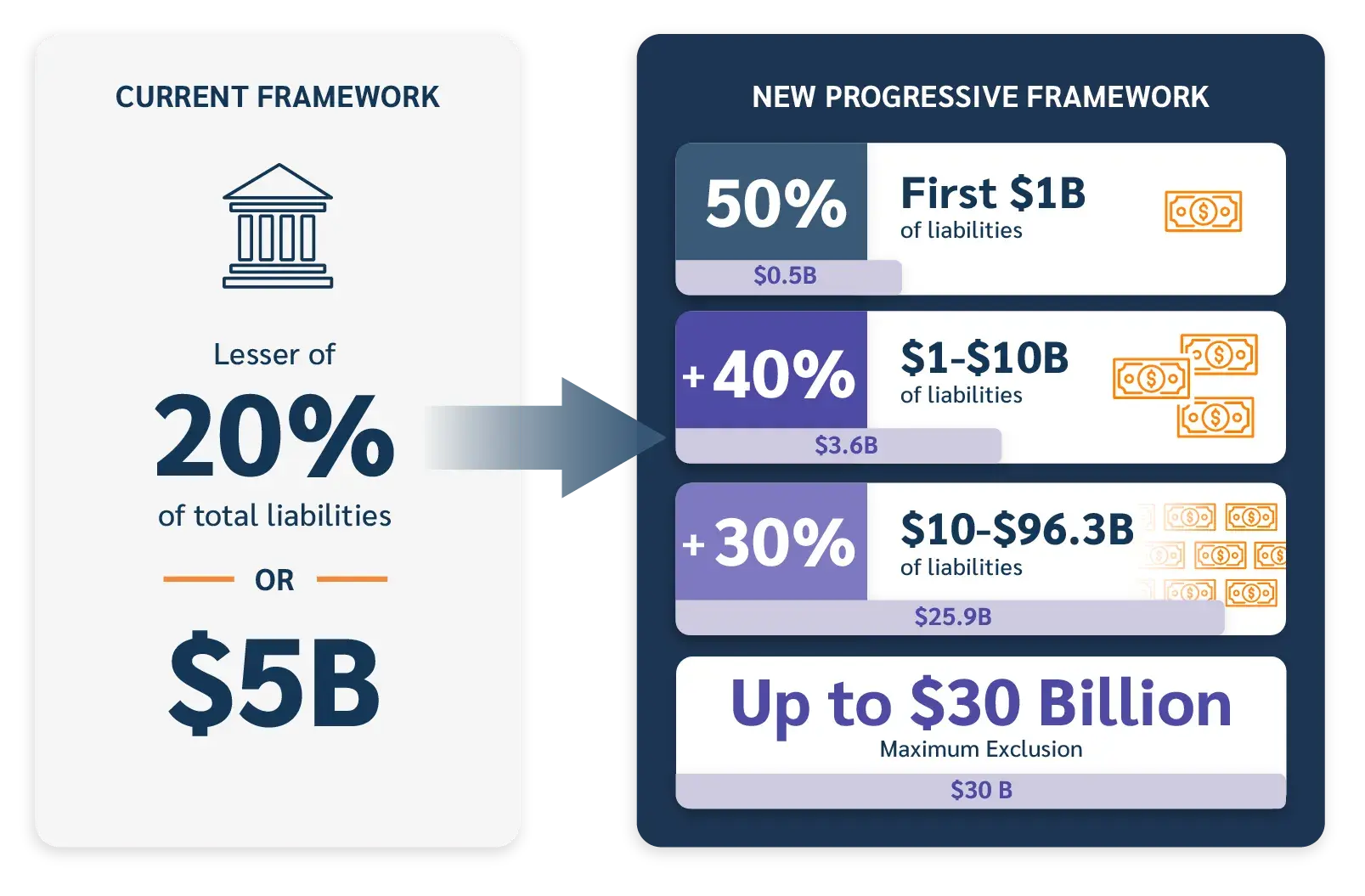
Subject to FDIC implementation. Each tier is calculated separately and added cumulatively.
Webinar Replay:
What Does H.R. 6644 Mean for Your Deposit Strategy?
In this webinar hosted by the American Bankers Association (ABA), R&T experts explore the strategic implications of H.R. 6644 and how banks can begin preparing for implementation.
Watch the replay to learn:
-
How H.R. 6644 changes reciprocal deposit capacity
-
Where expanded reciprocal deposit capacity may create new funding opportunities
-
What to consider when evaluating your deposit strategy
-
Why institutions should begin preparing now
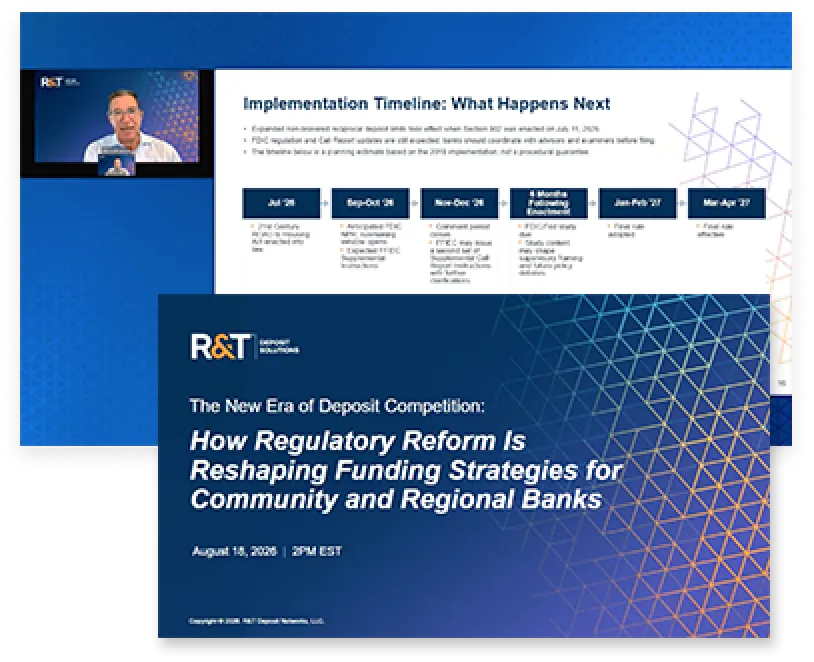
Understanding H.R. 6644
HR 6644 significantly increases the amount of reciprocal deposits that qualify for non-brokered treatment, giving institutions greater flexibility to strengthen their funding strategies.
Watch our overview to learn what changed, why it matters, and how your institution can prepare today.
Calculate Your New Non-Brokered Reciprocal Capacity
Institutions stand to gain substantially more non-brokered reciprocal deposit capacity under HR 6644. Input a bank name or FDIC certificate below to estimate your institution’s new limit and compare it with today’s cap.
Selected Bank
—
Select a bank to view the calculator.
At a Glance
Total Assets
—
Total Liabilities
—
Outstanding Reciprocal Deposits (per Call Report)
—
Net Increase in Non-Brokered Reciprocal Cap*
—
Reciprocal Deposit Caps Under Previous and New Rules
All #'s in 000's
| Total Liability Tiers | Previous Rules | New Rule (HR 6644) | ||
|---|---|---|---|---|
| Percentage | Eligible Reciprocal | Percentage | Eligible Reciprocal | |
*Represents the difference between the Total Available Capacity up to the Non-Brokered Reciprocal Cap under the previous rules and the Available Capacity up to the Non-Brokered Reciprocal Cap under the new rule (H.R. 6644).
Notice: The information displayed above, including any amounts, is based on publicly available data, provided for informational purposes only, and not intended to or otherwise constitute legal or other advice. Users should consult with their own regulatory or legal advisors on any new laws or regulations and related interpretations. R&T does not make any representations on whether a bank can classify deposits as brokered or non-brokered – this is solely the determination of that bank. Users are also responsible for confirming the accuracy of source data, any underlying assumptions, and relevant regulatory interpretations prior to using or otherwise making decisions based on the information above.
Why Banks Choose R&T
Regulatory change creates opportunity, and realizing that opportunity requires planning with a reliable partner.
Trusted by financial institutions for more than 50 years, R&T provides flexible reciprocal deposit programs that support funding, liquidity, and balance sheet objectives. As banks evaluate H.R. 6644, we enable them to move beyond understanding the legislation to identifying where reciprocal deposits can create the greatest strategic value.

Strategic Planning
Work with experienced specialists to evaluate how reciprocal deposits fit into your funding strategy, liquidity objectives, and growth plans.

Expand Across More Business Lines
Our experts can help you identify opportunities to extend reciprocal deposits beyond existing programs into commercial banking, trust, wealth management, retail banking, public funds, escrow, specialty deposits, and other relationship-driven funding sources.

Implementation Support
From program design and operations to banker education and customer communications, R&T sets institutions up for successful implementation.

Flexible Solutions
Every bank’s funding strategy is different. R&T configures reciprocal deposit programs to your institution’s business lines, operational requirements, and long-term growth objectives.
Ready to Discuss What H.R. 6644 Means for Your Institution?
Whether you’re evaluating new funding opportunities, expanding an existing reciprocal deposit program, or planning for the future, our team of experts is ready to help you assess the opportunity and develop a strategy that aligns with your institution’s needs.
"*" indicates required fields